Add this

Showing posts with label Navy. Show all posts

Thursday, January 23, 2014

Port Chicago Mutiny and the Port Chicago 50

"Hi, Papa Clifford!" It was my best friend, checking in on my dad because she heard he was in the hospital. He was now at home, and she was concerned. "I'm sorry, who is this?" my dad asked in his formal tone, the one he uses when he is "handling business."
"It's me, Pebbles!" Dad then laughed, happy to hear from my best friend. They chatted for a while. Dad immediately felt better. Pebbles is a lawyer and sometimes edits my posts when she is not in court. She is very excited that I will be writing about the Port Chicago Mutiny because civil rights icon Thurgood Marshall was involved with it. She received a "Thurgood Marshall Scholarship" while an undergrad at Howard University.

Thurgood Marshall spent the better part of his life in the twentieth century fighting civil rights. As a matter of fact, if you look up "Civil Rights", you are bound to see a picture of the stalwart Thurgood Marshall pictured in front of a courthouse, or in a distinguished robe as a US Supreme Court Justice Judge, the highest court of the land. If I were one of the African American soldiers being tried for mutiny, I would want Thurgood Marshall defending me. Winthrop's Military Law and Precedents defined mutiny as "to usurp, subvert or override superior military authority."

I described the harrowing tragedy of the Port Chicago Naval Magazine Explosion, the worst homeland disaster of World War II earlier this week. The explosion happened on July 17, 1944. Tons of ammunition being loaded onto Liberty ships exploded, instantly killing over three hundred people, the majority African American sailors. The Black enlistees were forced to quickly load the materials onto Liberty ships at Port Chicago, CA by their officers.  2014 marks the 70 year anniversary of the event, and commemorative memorials will take place across the United States.


I am quite sure that if you were a survivor of such a horrific event, you would not be fond of returning to work in an an unsafe environment. You probably experienced trauma as a first responder after viewing the mangled remains of bodies that were incinerated. Imagine being told to go back to the pier to do the same back breaking and dangerous assignment. Without given any protocols.

The 328 surviving Black enlistees refused. Fifty men were singled out and charged and convicted of mutiny. The men cited the Navy's lack of care for their safety. They wanted Navy officials to change procedures but the Navy refused to comply with their wishes. So the men were rounded up and arrested.
 Two hundred eight of these men were court-martialed, sentenced to bad conduct discharges, and the forfeit of three month's pay for disobeying orders. Fifty of them men, however, were charged with outright mutiny, a crime punishable by death. They would be known as the Port Chicago 50.  No Port Chicago sailor convicted of mutiny was sentenced to death; however, most were sentenced to eight to fifteen years of hard labor. In January of 1946, however, all of the accused were given clemency and were released from prison.
- See more at:blackpast.org

Scene from Paul Leaf's 2009 play,  Mutiny at Port Chicago.
Source: latimesblog.com


It was reported that the trial was for thirty days and deliberations were for 80 minutes, including lunch-time.
According to lighthousedigest.com, the prosecutor was naval officer James Frank Coakley, who claimed that the the sailors were "depraved" men who didn't want to work. In reading the research, I was utterly amazed at how the Black enlistees were subject to exaggerated claims and trickery. Their officers were viewed in a positive light and considered heroes; some even received Navy and Marine medals for bravery.

 Thurgood Marshal, the attorney on the appeal, put up a "valiant defense." Marshall was Chief Counsel for the NAACP and would argue 32 cases before the Supreme Court, and the famous Brown v. Board of Education that led to desegregation of public schools. (lighthousedigest.com)


Thurgood Marshall
Source: americaslibrary.gov


Furthermore, in addition to the discriminatory practices of placing Black men as the only ones handling the materials and hiring them in menial positions such as stevedores, Thurgood Marshall found that the 12th Naval District:

Ignored official cautions by the San Francisco waterfront union before the Port Chicago catastrophe and that an explosion was inescapable if they continued in the use of untrained seamen in the loading of ammunition.
The Navy dismissed an offer by this same union to dispatch skilled men to instruct Navy personnel in the proper handling of explosives. In addition, it came out that division officers of Port Chicago actually placed bets from $5 and up as to whose crew could load more ammunition. ( lighhousedigest.com)

Thanks to the persistent efforts of Thurgood Marshall, the NAACP, and letters written to the government, the Port Chicago 50 received clemency. The Pittsburgh Courier, the African American newspaper with the largest circulation in the 1940s, provided continuous coverage of the events. Petitions and protests were critical components on the outcome of the Black sailors.


 Many years later, according to history.com, a 1994 review concluded that the trial had strong racial overtones. On December 23, 1999, President William Clinton pardoned Freddie Meeks of Los Angeles, one of the few still living members of the original 50. Meeks wanted everyone to know about his plight and the story behind the Port Chicago Mutiny. Some individuals believed that asking for a pardon was essentially admitting to guilt, but Meeks remained steadfast in his desire to get the story of the Port Chicago Mutiny/Port Chicago 50, back out into the nation's consciousness.

The Port Chicago Mutiny caused the Navy to change their procedures for loading munitions. After the trial, men had to become certified in order to load these special materials. Port Chicago, therefore, proved to not only be a civil rights case, but also a human rights issue. Moreover, Port Chicago Mutiny struck a chord with journalists who discovered the case decades years later and decided to investigate it. Professors and people in the performing arts were inspired to research and create works of art, bringing the Port Chicago 50 into the media and dialogue.

Historians point out that the Port Chicago Disaster also was a factor in desegregating the military. Blacks needed to have an opportunity for advancement in the armed forces and not be confined to segregated, menial positions. Prevailing attitudes of the day that fostered discrimination had to be eliminated. In essence, Port Chicago Magazine Naval, the worst homeland disaster in WWII, and the Port Chicago Mutiny/Port Chicago 50, the largest naval mutiny in at the time, became a catalyst for change in the military. It enabled the military to take an introspective look on how it treated its personnel, and the need to be proactive in protecting all of its members in perilous situations.


comicbookjustic.com


So what do you think? Would you have been brave enough to stand up to a commanding officer and inform him that you weren't going to load those explosives?  If you were a wronged survivor, would you be willing to ask for a pardon after all those years?

Don't forget to subscribe to this blog via email, receive notifications and follow Montford Point Marines and Honor Blogspot on Pinterest.

Please share this post in honor of the 70th anniversary of the Port Chicago.


70 year anniversary of Port Chicago is this year.
nps.gov


blackpast.org
history.com
lighhousedigest.com
nytimes.com-"Freddie Meeks Pardon"
usmm.org

See also:  Pittsburgh Courier"A Non-Welcoming Homecoming For the 51st Defense Battalion"


Notes: Port Chicago Mutiny has been the subject and title of a NBC movie in 1999. It starred Michael Jai White and Duane Martin and was directed by Kevin Hooks. Morgan Freeman is listed as one of the executive directors. There has been plays, documentaries, a symphony, artwork and books on the subject. An episode of the CBS TV drama JAG devoted a story line on a  survivor in 2002. The Port Chicago Mutiny, written by Richard Allen in 1989, is the foremost reference on Port Chicago.

Tuesday, October 15, 2013

Ships Named After Famous Black People in WWII: Eighteen Liberty Ships

 "I'm going to join the Merchant Marines!," a young man who wanted to see the world would often shout in the classic movies. But what exactly did they mean?

The term Merchant Marines refers to the commercial ships or fleet of a nation and to the people who operate them. The United States Merchant Marines also serves as an auxiliary of the Navy in time of war or national emergency, transporting goods or materials needed by the Armed Forces. The United States Merchant Marine has played a vital role in every national conflict since 1775, and played a particularly large and vital part in World War II.      From: marad.dot.gov


                                                                Source: veteranstoday.org

Persons who served in the Merchant Marines are known as mariners, sailors, commercial sailors or seafarers. This organization suffered a high rate of casualties during World War II and were recognized for their impact in 1988 by a federal court. The Merchant Marines had 24,000 African Americans that served in the integrated Merchant Marines during World War II. In a previous post on the Navy's USS Mason, I wrote about the significance of the ship being named after an African American. He was an ensign who was killed in battle.


                                                   Famous Opera Singer Marian Anderson
                                                    christening the Liberty Ship Booker T. Washington.
 
                                                             Source:btwsociety.org


 Merchant Marines had eighteen ships named after famous Black Americans in World War II. This was significant because... well, you already know why if you are a regular reader of this blog. They even had ships named after Historically Black Colleges and Universities.  Liberty Ships were a class of ships quickly constructed during WWII. There were over two thousand constructed and eighteen of the vessels were named after Famous Blacks in Military, Business, and History. Victory Ships were another class of ships. Four of the Victory ships were named after HBCUs.


When I brought up the Merchant Marines to my father, he stated that he had briefly considered joining them in his youth. I am familiar with some of the more famous Black people that the Liberty Ships are named after;  several were named after sailors. One ship was named after an entertainer. Singer and actor Bert Williams' tragic story saddened me. He was an intelligent man in real life, but donned black, minstrel show make-up and a completely dumbed down persona. Williams ended up dying from alcoholism in his forties. I viewed his performances on You Tube and developed an understanding of his dichotomy and inner struggle.

The remaining folks on the list represent individuals who left an enduring legacy in other realms of society. In reading the list, you have to agree that this was a strong class of American leaders.


LIBERTY SHIPS
  1. Booker T. Washington- Leader in Black Community, founder of Tuskegee University.
  2. George Washington Carver- Botanist, scientist and educator, inventor of peanut butter.
  3. Frederick Douglass- Escaped slavery and became a noted writer and statesman.
  4. John Merrick- Successful businessman, founder of North Carolina Mutual Life Insurance Co.
  5. Robert L. Vann- Editor of the Pittsburgh Courier, a national Black newspaper.
  6. Paul Laurence Dunbar- Poet, first African American writer to gain wide attention.
  7. James Weldon Johnson- Writer, lawyer, songwriter, leader of the NAACP.
  8. John Hope- Educator, religious leader, first Black President of Atlanta University/Morehouse College
  9.  John H. Murphy- Publisher of the Afro American.
  10. Toussaint L'Ouverture- leader of the Haitian Independence movement, defeated Napoleon.
  11. Robert S. Abbott- Lawyer, newspaper publisher of the Chicago Defender.
  12. Harriet Tubman- Abolitionist, Union Spy, led slaves through Underground Railroad.
  13. Edward A. Savoy- Traveled to Paris as a US Envoy after the Spanish American War.
  14. Bert Williams- Vaudeville performer, actor, singer, best selling musical artist before 1920.
  15. James Kyron Walker- Second cook, lost on the Gulfamerica when it was torpedoed.
  16. Robert J. Banks- Messman on Gulfamerica, also killed after German attack.
  17. William Cox- Fireman from sinking David Atwater gunned down by Germans.
  18. George A. Lawson- Messman on the Tug Menominee which was torpedoed and sunk.

 VICTORY SHIPS
  1. The Fisk University
  2. The Tuskegee Victory
  3. The Howard Victory
  4. The Lane Victory


                                                                        Source: btwsociety.org
                                                                            Liberty Ship


    Sources: usmm.org   www.wikipedia.org

    Notes:
    Lane College is a Coed, liberal arts college located in Jackson, TN. "The college played a significant role in reducing the rate of illiteracy among Blacks in the South in fewer than fifty years." lanecollege.edu


    See Also:
    A Montford Point Marine and Tuskegee Airmen In One Family  (for info on Historically Black Colleges and Universities)

     USS Mason: The World War II Ship With A Mostly Black Crew                                                        

    Monday, October 7, 2013

    Early Black Military Experiences: Colonial America and the Revolutionary War


    White Americans have been ambivalent over the years about Black participation in military organizations and in most instances have encouraged or allowed Blacks in military activities only when forced by circumstances to do so.  - shsu.edu


    Across the Atlantic Ocean in Europe, defending one's city or country was the responsibility of all male citizens. Wealthy, prominent men became prestigious officers and lower class men served as regular soldiers for service overseas. Similar military practices were adapted in the New World, where settlers from Spain, France, Britain, and the Netherlands established colonies in America.

    The institution of slavery was also brought to America.  A range of policies existed for militia participation of both Free Blacks and Enslaved Africans. Major milestones during the Colonial Era and Revolutionary War listed below gives us a foundation on prevailing attitudes prior to forced desegregation of the armed forces. Early Black Military Experiences included outright banning, and eventually inclusion.  Many of the heroic contributions were quickly forgotten.


    Source: americanrevolution.org
    Reenactment Soldier


    Colonial Era


    1. 1639 - the Commonwealth of Virginia enacted a bill excluding Negroes from being provided with arms or ammunition.
    2. Dutch West Indian Colony of New Amsterdam (New York) armed slaves with a "tomy hawk and a half pike" to assist in fighting murderous Indians (Native Americans).
    3. 1653 - Massachusetts Colony required all Negroes and Indians from sixteen to sixty years of age "inhabitants or servants", to attend Military training along with the English.
    4. New England later followed Virginia in excluding Blacks from the militia. However, this led to Blacks having the same social standing as upper class men who were excluded from the militia. Blacks were then assigned laborer type tasks, such as building defensive fortifications.
    5. South Carolina, on the other hand allowed for "trusty" servants to help in defending the colony in 1703.
    6. Other Southern colonies did not allow for Blacks to become members of militia. There were larger populations of Blacks in the South and the power establishment feared slave mutinies and revolts.
    7. North Carolina, did make an exception when it came to Indian uprisings. In these cases every able bodied man was allowed to help terminate Indian uprisings.


    Revolutionary Hero Salem Poor*
    Source:www.autumnnewell.com 


    American Revolution (America's Independence from Britain) (1775-1783)

    ARMY
    1. 20% of the Colonial population of 22 million was Black.
    2. April 1775 - Black Minuteman fought at Lexington and Concord.
    3. May 1775 - Massachusetts adopted a resolution that no slaves be admitted into the Continental Army. 
    4. July 1775 - Under General George Washington and General Horatio Gates, Continental Amy recruiting officers were not to enlist any "stroller, Negro, or vagabond."
    5. November 1775 - John Murray, Royal Governor of Virginia, representing the opposing British, offered freedom to enslaved Blacks willing to bear arms against the colonists. Murray was known as the Earl of Dunmore or Lord Dunmore.
    6. December 1775 - 300 Blacks joined on the British side with "Liberty to Slaves" etched on their uniforms, calling themselves the "Ethiopian Regiment."
    7. December 1775 - As a result of Dunmore's Ethiopian Regiment, Washington changed part of his policy and allowed free Blacks in the Continental Army.
    8. 1777 - It was reported that some slaves substituted for their masters despite the policy barring slaves.
    9. 1778 - Washington's Continental Army integrated a number of African Americans. There was also an all Black battalion from Rhode Island and Black companies from Connecticut and Boston, called the Colonials and Bucks of America.
    10. 5,000 Black Soldiers fought in the 300,000 Continental Army


    NAVY

     1775 -  Several states paid bonuses to Black crew members and granted freedom. In short, the Continental Navy did not bar Blacks. The Navy was supplemented by individual state and private funding. Ship crews were integrated and Black crew members came with prior maritime experience. (It was reported that some made it up the ranks of pilots; pilots are responsible for navigating a ship through narrow or congested waterways.)

    Secretary of War James McHenry
    Established Policy Banning Negroes in the Marines.
    Source: wikipedia.org


    MARINES

    1. A dozen or more African Americans served in the Marines.
    2. First African American to fight as a Marine was John Martin (Keto). He was enlisted without his Delaware slave owner's permission and saw combat on the USS Reprisal. He was at sea for a year and a half and perished when his ship sank in October, 1777.

    MARINES RE-INSTITUTED

    ***1798 - Marines re-instituted. Secretary of War James McHenry proclaimed, "No Negro, mulatto, or Indian to be enlisted." Following British protocol, the United States Marine Corps enacted a policy which "set a higher standard of unit cohesion for Marines so that they would remain loyal, maintain shipboard discipline and help put down mutinies."

    The Marines did not change their long standing policy until 1942, when Howard P. Perry became their first African American recruit and launched the history of the Montford Point Marines. Protests, letters to Congress, and the Axis Powers' machinations of World War II, led to the signing of Executive Order 8802. It ended discrimination in the National Defense Industry. No longer could Blacks be prevented from enlisting in the United States Marine Corps.

    Throughout history it has been shown that Black participation in military service has been met with reservations. Reasons given include fear of slave revolts and mutinies, not wanting African Americans to ascend the socio-economic ladder, and the belief that Blacks were not intelligent enough to fight in combat situations. In reality, since the American Revolutionary War, Blacks had received high marks and praise from their commanding officers and demonstrated bravery. It is indeed unfortunate that Blacks were able to participate in military service only after military organizations were forced to allow them. So little faith was behind the Montford Point Marines in the 1940s that these soldiers were considered an experiment, and they were sent to outlying regions of the Pacific.

    Early Black Military Experiences demonstrate the willingness for men, who in some cases, did not have their freedom, but were ready to fight. The Colonial Era and the Revolutionary War provided a preview of what Blacks in combat could achieve.

    Source: www.forloveofliberty.org


    Notes:  * Despite Salem Poor's surname, he was able to purchase his freedom as a slave with a year's salary in 1769. Salem Poor was sent to build a fort in Bunker Hill during the Revolutionary War. He killed British Lieutenant Colonel James Abercrombie in Charlestown, MA during combat. The Battle of Bunker Hill had approximately 1,000 African American casualties. 14 American Officers sent a petition to the Massachusetts legislature, proclaiming that Poor "Behaved like an experienced officer as well as an excellent soldier." Salem Poor was featured on an American Postal Stamp two centuries later. From www.fold3.com

    In 1736, Blacks served as officers in a military unit to defeat the Natchez Indians in Mobile, Alabama.  This marked the first time Negroes were officers.


    Sources: shsu.edu

    Monday, September 16, 2013

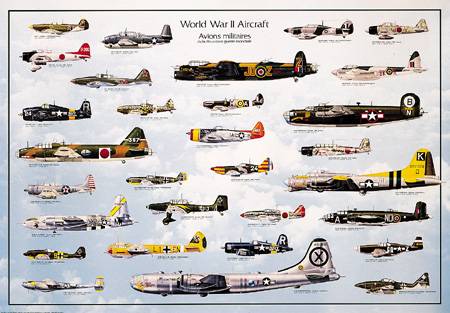
    Aircraft Recognition: Would You Be Able to Identify World War II Planes?

    As the narrative continues we cannot forget about the various aircraft used during World War II. I have posted samples of some airplanes. In a earlier post I discussed the "Mitsubishi Zero" and how it created many Japanese victories during the early part of the war. WWII planes were responsible for some of the most cataclysmic aerial battles in history. But a question arises. Would you be able to identify World War II planes? I have known pilots that can look up into the sky and easily identify airplanes. It is one thing to recognize aircraft on a peaceful, sunny day. Try identifying them in a middle of a war-torn country.

    World War II was often a battle of technological advances. Throughout the war, the Allied and Axis Forces constantly worked to improve the abilities and features of their equipment. No type of technology showcased this battle for supremacy better than the fighter planes. Every few months saw the introduction of a new or improved fighter plane to combat the latest version developed by the opposing side.        www.howstuffworks.com
     There were over three hundred planes manufactured in WWII from dozens of countries. I could conceivably develop an entire blog on aviation of this era; fortunately, there are blogs, websites, and books already devoted to military planes. I am focusing on the major types of WWII planes, just as I did with ships.


    MAJOR TYPES OF WWII PLANES

    Fighter: Air to Air combat with enemy planes as well as air to ground combat. Armed with cannons and machine guns.

    Dive Bombers: As the name implies, during a plane's dive, a bomb was released over an intended target

    High Level Bombers: These large planes dropped several bombs, which increased their chances of hitting the target.

    Torpedo Bombers: Torpedo bombs were ejected into the ocean headed on a swift path to a submarine or ship.

    Patrol Planes: Designed to travel long distances over the water, sought out submarines and enemy ships. Also, used for rescue.


    marshallfoundation.org


     Both Army and Navy provided official Aircraft Recognition Manuals. There were even official playing cards that had the images printed on them. Soldiers during their recreational time would be able to practice learning the different diagrams. It was vital that the personnel could look at the wing, tails and body to determine if an approaching aircraft were "Friend or Foe". This certainly avoided cases of friendly fire, where a Soldier would mistakenly shoot down one of their own planes. Of course, reconnaissance missions and surprise attacks required the keen ability to identify aircraft within seconds. It was simply a matter of life or death. Aircraft Recognition in World War II then, was extremely important even among civilians.


    Source; www.lonesentry.com


    Source: combatairmuseum.org


    Source: ameshistoricalsociety.org


    Source: battlefieldstours.co.uk
     Civilians had to identify aircraft as well.


    So, this was what my father was trained to do, over seventy years ago in the Marshall Islands. He had to understand Aircraft Recognition. Dad manned the 90mm Anti-Aircraft Artillery. Would you be able to identify WWII planes during the war?

    http://montfordpointmarinesandhonor.blogspot.com/2013/08/the-mitsubishi-zero-and-early-japanese.html
    http://montfordpointmarinesandhonor.blogspot.com/2013/08/dad-and-enemy-planes.html
    http://www.militaryfactory.com/aircraft/ww2-aircraft.asp


    Sunday, September 8, 2013

    African American Soldiers and Sailors Tribute: Buffalo Soldiers, Montford Point Marines,Tuskegee Airmen, U.S.S. Mason Crew

    I found some interesting drawings on three groups of African American Soldiers that belatedly received recognition in mainstream media. They depict images of three Medal of Honor Groups:  Buffalo Soldiers, Montford Point Marines and Tuskegee Airmen. Also included was a portrait of the U.S.S. Mason ship and Sailor. The Mason was a Navy ship that had an all Black crew who received recommendations as a Destroyer Escort during World War II.

    Now, in searching for pictures to accompany my posts, I encounter lots of artwork along with actual photos. These particular drawings I thought were interesting because it demonstrates that the person who commissioned them obviously knows their military history. Truthfully, until last week I did not have knowledge of the U.S.S Mason being an all Black WWII Navy ship.

    Some might take offense that the images are on tobacco products, but the fact remains there is a segment of the population that smokes pipes. I am not endorsing any products but merely showing the artistic rendering. Furthermore, many men, including my father, smoked cigarettes and pipes during this time period. It was common for cigarettes brands such as Lucky Strikes to be distributed to service personnel. Photos and films show cigarettes dangling from the mouths of Soldiers.

    Others might think back to an era when Black faces were used to sell products in a way that was demeaning and reinforced negative stereotypes. Examples would be Sambo and Aunt Jemima with a kerchief on her head (the scarf has been replaced with relaxed hair since the 90's) and the Gold Dust Twins.

     In countries outside of the United States, products romanticize the slavery/minstrel era, with ebony skin caricatures emblazoned on the packaging to sell items such as flour and candy. I have seen these products in American markets that import these goods. Every once in a while a foreign company or media will roll out extremely controversial imagery. Usually there is public outcry and the offending image is removed with a quick apology.

    Yet for some reason in the U.S., we still have Uncle Ben's Rice and the Cream of Wheat gentlemen; non-threatening, ready to comply Negro servants in grocery stores. Newer images introduced that are in poor taste are challenged; social media erupts into a frenzy.


    Back to the company that has the artwork of the African American Soldiers and Sailors: Montford Point Marines, Tuskegee Airmen, Buffalo Soldiers, and the U.S.S. Mason crew. It appears that the artwork is in tribute. Clearly, these Soldiers represent strength and intelligence. This particular company has a cross section of people and themes printed on their products. Some examples would be the September 11th First Responders, Architecture, and various Geographical locations. I think a savvy consumer purchasing their artisan brand would appreciate the background knowledge and gain some insight on the imagery.


    Sources: All photos from Cornell & Diehl, Inc.
    http://www.cornellanddiehl.com/index.html


    According to the company website, the Montford Point Marines was fourth in a series honoring African American Soldiers. I know in the 90's, there were companies that created Tuskegee Airmen paraphernalia and Negro Baseball League gear. In fact, my father wore some of the gear. The Negro Baseball League (1920-1950) existed before American Major League Baseball became integrated. So time will tell. Art sparks interest and dialogue. Don't you agree?


    Tuesday, May 28, 2013

    The Golden Fourteen: Black Female Navy Members in WWI

    Did you know that in World War I the United States had uniformed Black Females in the armed forces? Neither did I. The United States Navy had the distinction of having fourteen uniformed African American female Yeoman. Navy Yeomen serve as office managers and perform other various clerical and administrative duties. (www.navycs.com).  Kelly Miller, Dean of the College of Arts and Science at Howard University in Washington, D.C., wrote a seminal book in 1919 entitled,  The History of The World War for Human Rights.

    The Golden Fourteen worked under the tutelage of John T. Risher during World War One. Risher was a Civil Servant in D.C. in the Navy Department. Risher's job was to keep an accurate account and track of deployed kinsman in the branch of the armed forces. This was critical because of the increased number of servicemen during war time.

    According to Joseph Risher:

    The women were all cool, clear-headed and well-poised, evincing at all times in the language of a white chief yeoman: a tidiness and appropriate demeanor both on and off duty which the girls of the white race might do well to emulate.

    Golden Fourteen pictured in photo A.
     Source: www.lwfaam.net. This site has further information on the subjects of photo B.


    Regretfully,  The Golden Fourteen received scant recognition during their lifetime. They consisted of:

    1.  Armelda H. Greene of MS
    2.  Pocahontas A. Jackson of MS
    3.  Catherine E. Finch of MS
    4.  Fannie A. Foote of TX
    5.  Ruth A. Wellborn of DC
    6.  Olga F. Jones of DC
    7.  Sarah Davis of MD
    8.  Sarah E. Howard of MS
    9.  Marie E. Mitchell of DC
    10.  Annie G. Smallwood of DC
    11.  Maude C. Williams of TX
    12.  Caroll E Washington of MS
    13.  Joseph (sic) B Washington of MS
    14.  Inez B. McIntosh of MS

    Listed above is the grandmother of the late Commerce Secretary of  Ronald H. Brown*, Ruth Wellborn, who is buried at Arlington National Cemetery.

    Some sources listed a higher number of Negro Yeoman. In the article entitled " Milestones of Women in the US Navy" www.history.navy.mil/.womentimeline" the number listed is 24 African American Women. However, the names of the enlisted females are omitted. From this site:

    It was also noted that the work of this section has proven highly efficient and satisfactory, as the plans in vogue there under its modern management are both scientific and accurate. Many of the superior officials have scrutinized the experiment very closely and are a unit in the sincerity of their admiration of its success and effectiveness. Source: www.history.navy.mil/library/online/negro_navy.html.

    In other words, The Golden Fourteen were a well oiled machine!


    *Ron Brown served as Commerce Secretary during the Clinton Administration and was an Army Officer, chief lobbyist for the National Urban League, law partner at a prestigious firm and elected chairman of the Democratic National Committee before his tragic plane crash in 1996. For further reading see, Holmes, Steven. Ron Brown: An Uncommon Life: New York,  John Wiley & Sons, 2000.


    Friday, March 8, 2013

    USNS Montford Point

    The United States Naval Ship Montford Point was christened by Jackie Bolden, wife of retired Marine Major Charles Bolden and the current administrator of NASA in San Diego, California on March 2, 2013.

    It was fitting that the christening took place in San Diego, because San Diego is the location that the 51st Battalion, America's first all Black combat division, was deployed. USNS Montford Point is the Navy's first mobile landing platform (MLP1), and some thirty Montford Point Marines were invited for this special event. As a surviving member of the 51st, my father has vivid memories of California.

    Artistic rendering of USNS Montford Point (MP1)
    www.sidinfo.com


    The "Pier at Sea" costs $500 million and was manufactured by General Dynamics. It is the first of three landing platforms.  Present at the ceremony was Montford Point Marine Ed Pfizer of New Orleans, who stated in the Coronado Patch, " I was one of the first ones to sign up. We fought two wars; we fought Jim Crow and we fought the Japanese."

    The USNS Montford Point will serve as a 785 foot mobile pier, reducing American Forces' dependency on foreign ports. It also:


    --Provides 25,00 square feet space to house vehicles and equipment.
    -- Holds 380,000 gallons of fuel

    USNS Montford Point
    source:usnavy


    Jacksonville, North Carolina is the site of Montord Point, Camp Lejeune. Montford Point was the Boot Camp for African American Marine Recruits. It is also the same location that my father was demoted from Private First Class for being out of uniform. Dad was wearing a field jacket instead of his official coat in the town of of Jacksonville, North Carolina.  Dad reports being "busted down" to Private. It took him an entire year to earn Private First Class again. His honorable discharge papers reads that he earned the rank of "Corporal".  He added, "I could of been a Sergeant!"


    Source: militaryfactory.com/ranks
    Enlisted Marine Rankings 


    Dad also discussed his stint riding in an a Jeep with the Navy Shore Patrol. The SPs did not take kindly to Negro Marines. So the Navy, which the Marines falls under, decided to have Montford Point Marines patrol  the area with the SPs. Dad stated that an unruly drunk white soldier became violent and called him the "N" word.  The soldier was subdued by Dad striking him with the butt of his firearm. Luckily, no one was injured and my Dad was not punished. Which reminds me of the belief that sometimes the enemy is not far away, but resides in close proximity...


     From militaryfactory.com:

    "The US Marines dates back to 1775 when the first battalions of men were formed under the command of Samuel Nicholas (1744-1790). They assault enemy positions through amphibious means."

    Also:

    "Their extensive service in the Pacific Theater during World War II Solidified their modern image as one of the best and toughest group of soldiers anywhere in the world."

    Congratulations to all Montford Point Marines who were very brave, and now have a state of art vessel named on their behalf. Like their Congressional Medal of Honor, it is a distinction well deserved.


    Animated Social Gadget - Blogger And Wordpress Tips